Address
Suzhou Industrial Park, Jiangsu, China
Work Hours
Monday to Friday: 9AM - 6PM
Weekend: 10AM - 5PM
About 71% of the Earth’s surface is covered by water, yet water resources are extremely unevenly distributed. Seawater accounts for 97.4%, while freshwater directly accessible to humans makes up merely 2.6% of global water volume. Driven by population growth, industrial expansion and rapid urbanization, the gap between freshwater supply and demand keeps widening worldwide. Water scarcity has become a major bottleneck restricting global sustainable development. Against this backdrop, seawater desalination, endowed with abundant raw water resources and strong adaptability, has emerged as a pivotal technical solution to water shortage. It is widely deployed to secure domestic and industrial water supplies in tropical arid zones and coastal regions.

1. Mainstream Core Technologies for Seawater Desalination
At present, two major technical systems dominate commercial scale seawater desalination with proven maturity and broad application: membrane based desalination and thermal desalination. Each suits specific scenarios and can be selected according to raw water quality, operating conditions and end user water requirements.
Reverse Osmosis (RO) and Nanofiltration (NF) represent the leading mainstream solutions for modern seawater desalination. Technological advances in key components including high precision filter membranes, high pressure pumps and high efficiency energy recovery devices have greatly improved process energy efficiency. This effectively cuts down both capital expenditure (CAPEX) and long term operational expenditure (OPEX), enabling large scale and cost effective deployment of desalination facilities.
2. Complete Process Chain of Seawater Desalination
Reverse Osmosis constitutes the core of seawater desalination. Nevertheless, RO filtration alone cannot produce safe potable water, nor can it guarantee stable and efficient plant operation. Seawater desalination is far more than simple filtration; it relies on an interconnected, finely controlled full process chain, where every procedure determines product water quality and equipment service life.
Pretreatment covers all purification and impurity removal steps ahead of the RO unit. This upstream phase intercepts contaminants and prevents membrane fouling and component wear. It extends membrane service life, reduces chemical cleaning frequency and membrane replacement costs, serving as the foundation for reliable system performance.
Desalination membranes come in diverse grades with differentiated performance to match varied water treatment objectives. Depending on project conditions, options include high rejection, ultra low energy and high boron rejection membranes to satisfy specific desalination standards.
RO systems can adopt single pass or double pass configurations, determined by raw water salinity, seawater temperature and target water quality. Under normal conditions, single pass RO meets EU drinking water standards, keeping boron content below 1 mg/L. To comply with the stricter WHO boron limit of 0.5 mg/L, a second pass RO boron removal process is required for advanced purification.
Energy recovery devices are critical for power consumption control and operational profitability. Selection shall take local electricity prices, energy mix and environmental regulations into consideration, so as to strike a balance between energy saving, cost reduction and eco friendly operation.
Post treatment and polishing follow the RO stage to adjust treated water parameters. This step ensures the output meets specifications for drinking water, industrial process water and other end use applications.
3. Environmental Concerns and Economic Optimization Considerations
Seawater desalination generates high salinity brine. Direct discharge may alter salinity levels in adjacent seawater, threatening marine organisms sensitive to salinity fluctuations and coastal ecosystems. Therefore, harmless handling and compliant discharge of brine represent a non negotiable environmental challenge, which also bears significant cost implications. Brine management solutions must be customized based on local marine ecology and environmental regulations.
The optimization principle of desalination lies in integrating proven technologies and optimized equipment combinations. On the premise of stable and qualified water output, facilities aim to minimize energy consumption and operating costs, achieving balanced performance across water quality, capacity, cost and environmental protection.
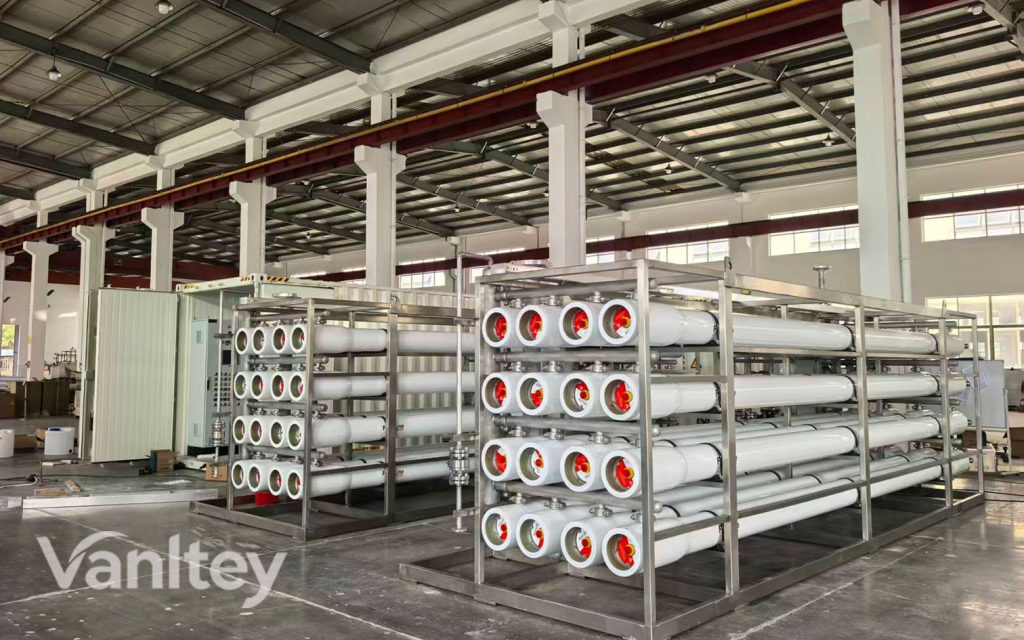
We deliver end to end seawater desalination solutions ranging from seawater intake to modular containerized units, with a maximum production capacity of 1 000 m³/h, catering to large scale water supply demands of diverse projects.
4. Diverse Application Scenarios
With mature processes and flexible configurations, desalination plants produce a full spectrum of qualified water: WHO and EU compliant potable water, agricultural irrigation water, industrial water (boiler feed water, cooling water, etc.), as well as semi pure and ultra pure water for high precision sectors such as electronics and pharmaceuticals.
The technology works with multiple natural seawater and brackish sources: surface seawater, deep seawater, brackish estuarine water and beach well extracted seawater, demonstrating broad applicability and strong environmental adaptability.
Seawater desalination has evolved beyond a mere technical measure into a strategic pillar for addressing global water scarcity and advancing sustainable water utilization. Vanltey Tech develops and implements high efficiency, energy saving and cost effective desalination solutions. With proven processes and customized services, we help regions worldwide optimize water resource allocation, mitigate water shortages and advance coordinated ecological and economic development.
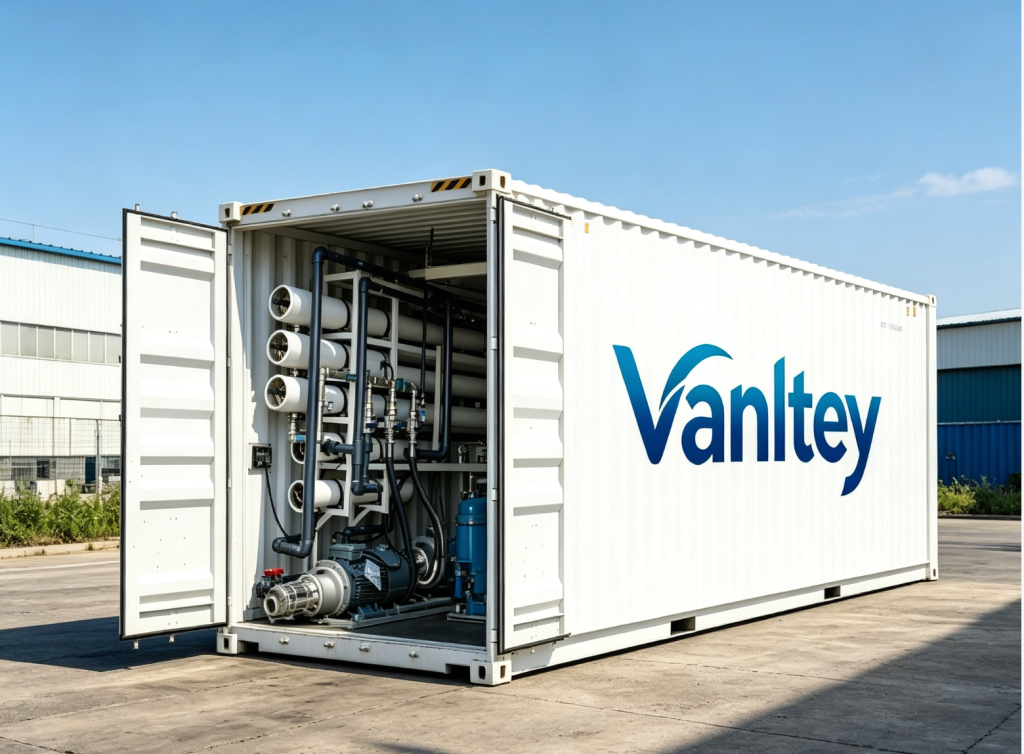
Vanltey is committed to delivering efficient and reliable water treatment solutions. Our business covers containerized/small-scale seawater desalination systems, industrial water treatment equipment, and a full range of spare parts including RO high-pressure pumps, energy recovery devices, pneumatic diaphragm pumps, centrifugal pumps, and reverse osmosis membranes. Leveraging our strengths in OEM/ODM customization and supply chain integration, we provide global customers with one-stop services ranging from equipment supply to project operation and maintenance.