Address
Suzhou Industrial Park, Jiangsu, China
Work Hours
Monday to Friday: 9AM - 6PM
Weekend: 10AM - 5PM
About 71% of the Earth’s surface is covered by seawater, yet humanity has long struggled with the paradox of “thirsting while surrounded by the sea.” According to the International Desalination Association (IDA), global installed desalination capacity has reached approximately 120 million cubic meters per day, with reverse osmosis (RO) accounting for about 69% of that capacity. More than 20,000 desalination plants are operating across 150+ countries and regions. From the shores of the Persian Gulf to the coast of the Bohai Sea in China, desalination is evolving from “a stopgap for arid nations” into strategic infrastructure for global water security.
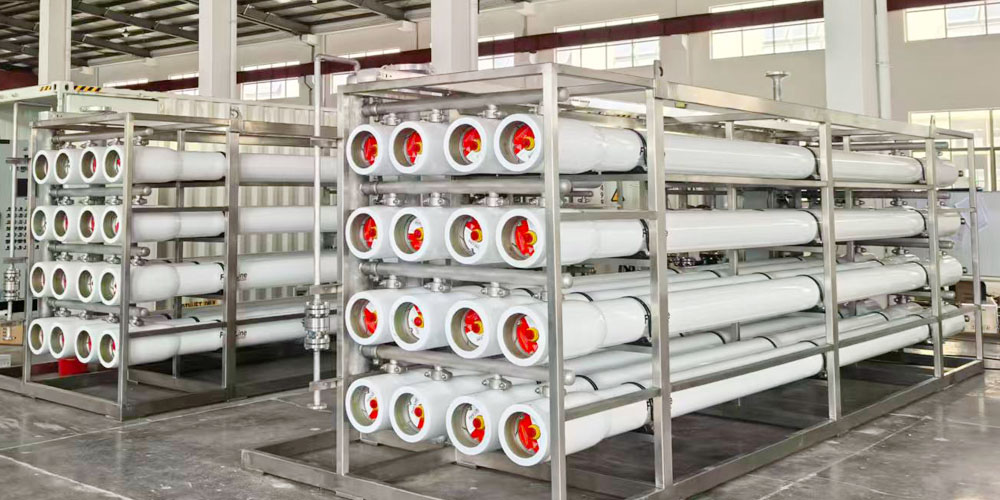
Of all the water on Earth, only about 2.5% is fresh water, and most of it is locked in glaciers and deep aquifers — less than 1% is directly usable by humans. Meanwhile, population growth, urbanization and industrialization keep pushing water demand higher, while climate change intensifies droughts, saltwater intrusion and the uneven distribution of water resources across time and space. Traditional water supplies (rivers, lakes and groundwater) are approaching the limits of their carrying capacity —finding “new water sources” has become a global challenge.
In this context, the ocean — the planet’s largest “reservoir” — is virtually inexhaustible. Desalination is not affected by rainfall or seasons and delivers stable, controllable output, making it one of the most reliable supplementary water sources for coastal cities, islands, industrial parks and offshore platforms. In China, for example, industry statistics show the country’s total desalination capacity has exceeded 2.9 million tons per day, with reverse osmosis accounting for more than 90% of that capacity; desalination equipment has also been designated a priority development direction in the national “15th Five-Year Plan.”
Desalination technologies fall into two broad categories: thermal and membrane-based. Thermal processes (multi-stage flash and multi-effect distillation) are energy-intensive, consuming more than 25 kWh per cubic meter of water produced. Reverse osmosis (RO), by contrast, uses high-pressure pumps to pressurize seawater above its osmotic pressure, forcing water molecules through a semipermeable membrane while salts are rejected. RO consumes only 3–6 kWh per cubic meter, at a production cost of roughly US$0.45–1.72 per cubic meter — the most cost-effective and widely deployed mainstream technology today. This is precisely why RO accounts for about 70% of global desalination capacity.
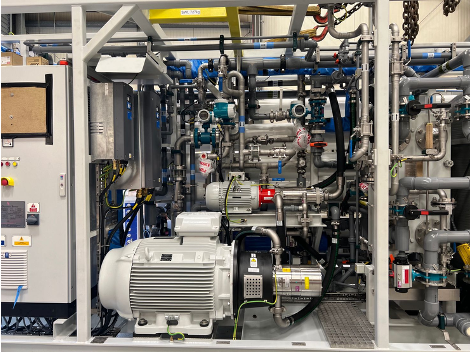
The energy consumption and cost of an RO system are almost entirely determined by two key pieces of equipment.
The high-pressure plunger pump — the “heart” of the system. It pressurizes seawater to the level required to “squeeze out” fresh water (typically 50–70 barg or higher for seawater desalination). Seawater contains salt, sand and biological fouling agents, so the pump must combine corrosion resistance, wear resistance, high efficiency and long service life. Energy typically accounts for 40%–60% of the operating cost of an RO desalination plant — every percentage point of improvement in pump efficiency translates directly into electricity savings.
The energy recovery device (ERD) — the system’s “power-saving valve.” When high-pressure brine leaves the RO membrane array, it still carries more than 90% of the input pressure energy. An ERD captures this energy and transfers it to the incoming feed seawater, allowing the high-pressure pump to maintain system operation by adding only a small amount of make-up energy. The numbers tell the story best: without an efficient ERD, an RO system can consume 6–8 kWh/m³ or more; with a high-efficiency ERD, specific energy consumption drops to 2.5–3.5 kWh/m³ — a 40%–60% reduction in energy use. In short: the high-pressure pump determines whether the system can produce water; the ERD determines whether producing it makes economic sense.
Water-hydraulic axial piston pumps and energy recovery devices are systematically engineered around the two core pain points of RO desalination — energy consumption and maintenance.
High-pressure plunger pumps:
Energy recovery devices:
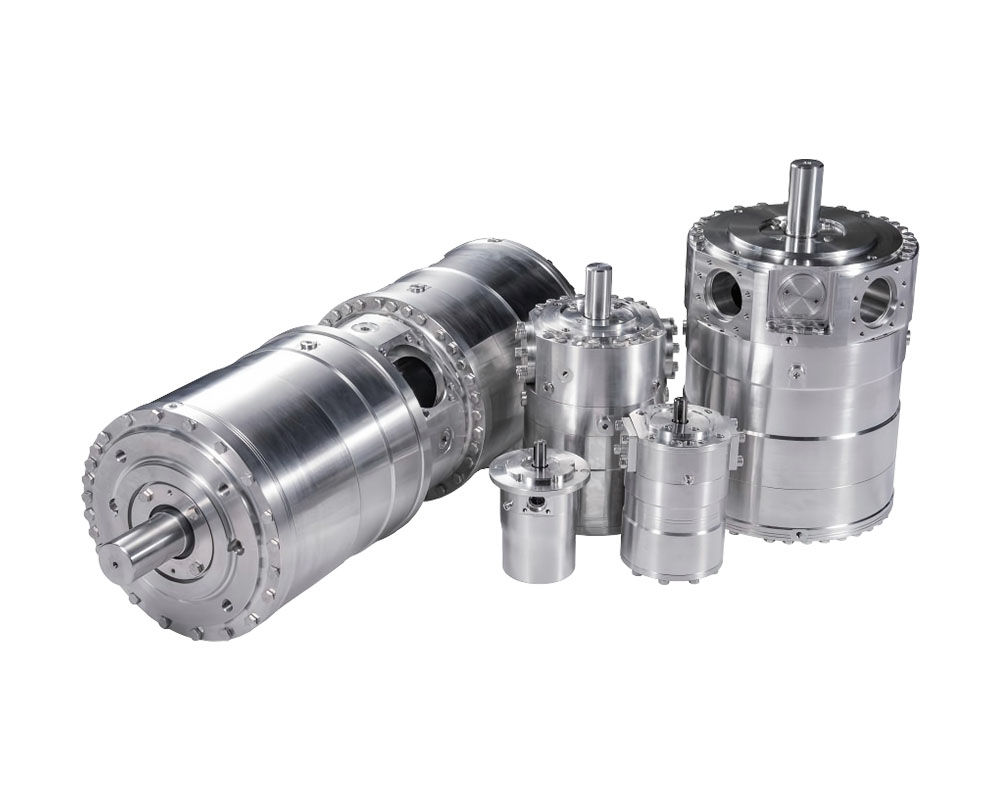
Seawater desalination is not just about solving one city’s water shortage — it is a water-security imperative facing the world under the combined pressures of population growth, climate change and the energy transition. Whether desalination can be scaled up depends on two words: economics. More efficient high-pressure pumps and more reliable energy recovery devices are exactly what it takes to move desalination “from expensive to affordable, from demonstration to mainstream.”
Vanltey delivers efficient, reliable, low-maintenance core equipment, opening the way to the “blue faucet” for every coastal city, every island and every industrial park.