Address
Suzhou Industrial Park, Jiangsu, China
Work Hours
Monday to Friday: 9AM - 6PM
Weekend: 10AM - 5PM
Containerized seawater desalination systems convert seawater or brackish water into potable freshwater through a multi-stage treatment train. The process is typically divided into three stages: pre-treatment, core desalination, and post-treatment. As a global desalination solutions provider, Vanltey has developed a complete technology and product portfolio around these three stages, delivering equipment supply and system integration to customers worldwide.
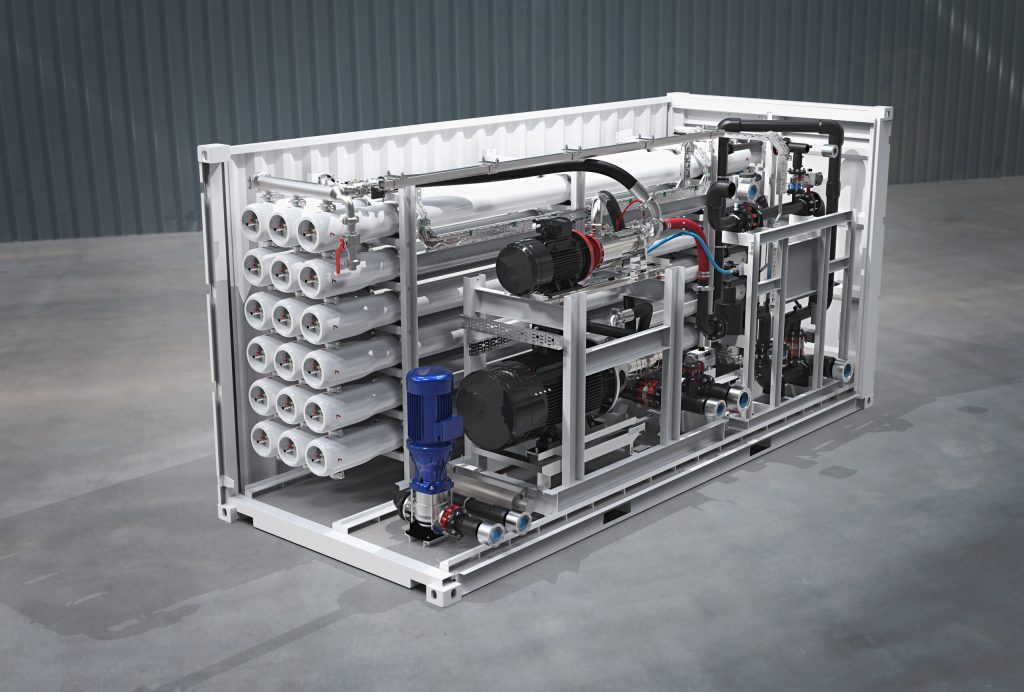
Seawater is drawn by a feed pump and passed through quartz sand and activated carbon filtration to remove suspended solids, colloidal matter, and a portion of organic compounds, reducing turbidity. The water then undergoes pH adjustment and anti-scalant dosing before entering a precision filtration stage, which removes finer particulates and ensures the feed water meets the design specifications of the reverse osmosis (RO) membranes.
Pre-treatment performance directly governs membrane lifespan and system availability. Vanltey integrates the pre-treatment train and core process units into a standard container footprint, enabling rapid on-site commissioning without civil construction—suited to remote coastal sites, islands, and emergency water supply.
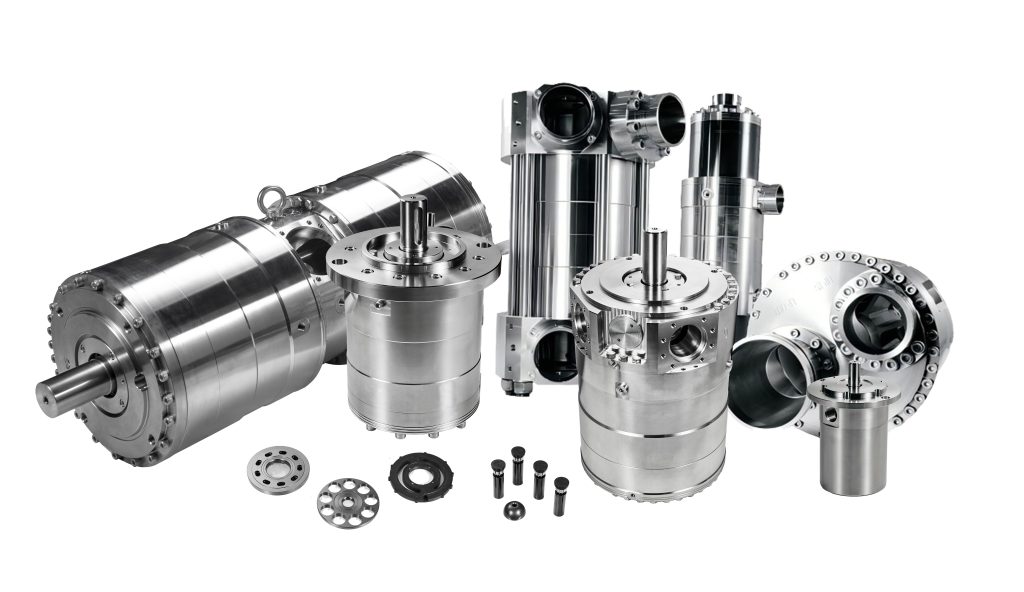
After pre-treatment, a portion of the feed seawater is pressurized by a high-pressure pump, while the remainder passes through a pressure exchanger for energy recovery and additional pressurization. Both streams enter the RO membrane stack. Under applied pressure, water molecules permeate through the membrane as product water, while dissolved salts, minerals, and other impurities are rejected and discharged as concentrated brine. RO membranes achieve rejection rates exceeding 99% for salts and impurities, with desalination rates up to 99.5%.
Reverse osmosis is the most widely deployed desalination technology globally. By the end of 2023, RO-based projects accounted for 67.24% of China’s total desalination capacity, confirming its dominant position. Vanltey’s core technical focus is this stage: optimizing membrane stack configuration and energy recovery integration to lower specific energy consumption (kWh/m³) while maintaining high rejection performance.
RO permeate requires pH adjustment and disinfection (UV or chemical) to meet drinking water standards for safety and taste.
Post-treatment is often under-engineered, yet it directly determines final water quality at the point of use. Vanltey supplies customized post-treatment packages configured to local water quality standards and project requirements, ensuring product water meets both regulatory compliance and end-user acceptability.
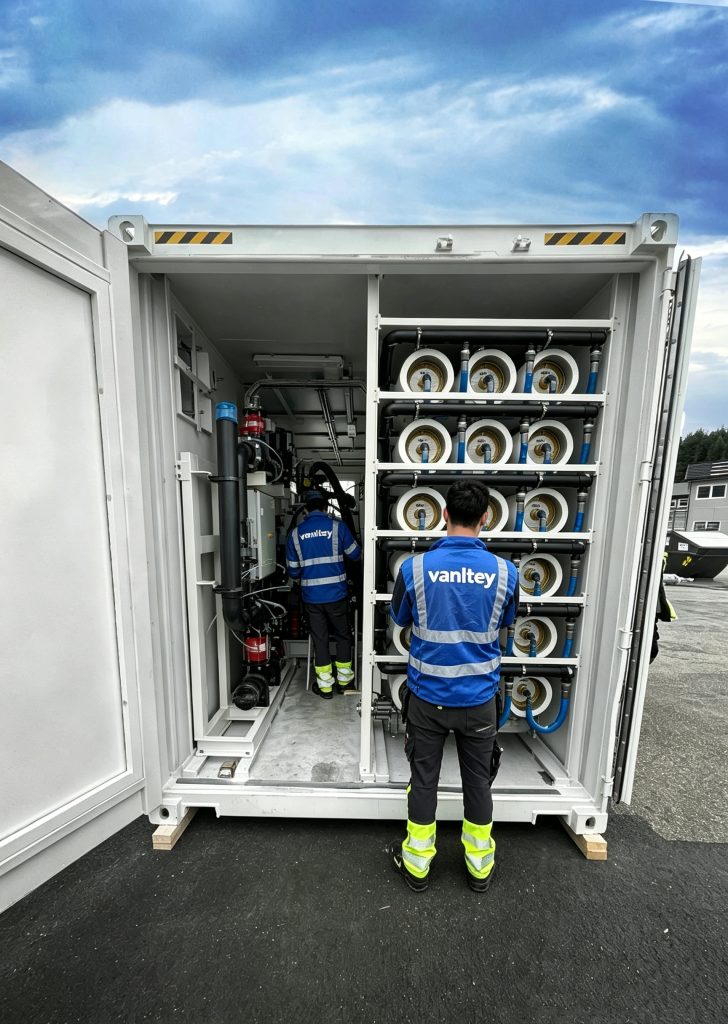
The global desalination market is led by established players including Suez, Veolia, IDE, and Doosan. The Middle East and Africa account for approximately 55% of installed capacity, with Asia-Pacific at around 23%. Vanltey positions itself as a global provider in this growing market, delivering containerized systems for coastal municipal supply, industrial process water, and emergency water security.